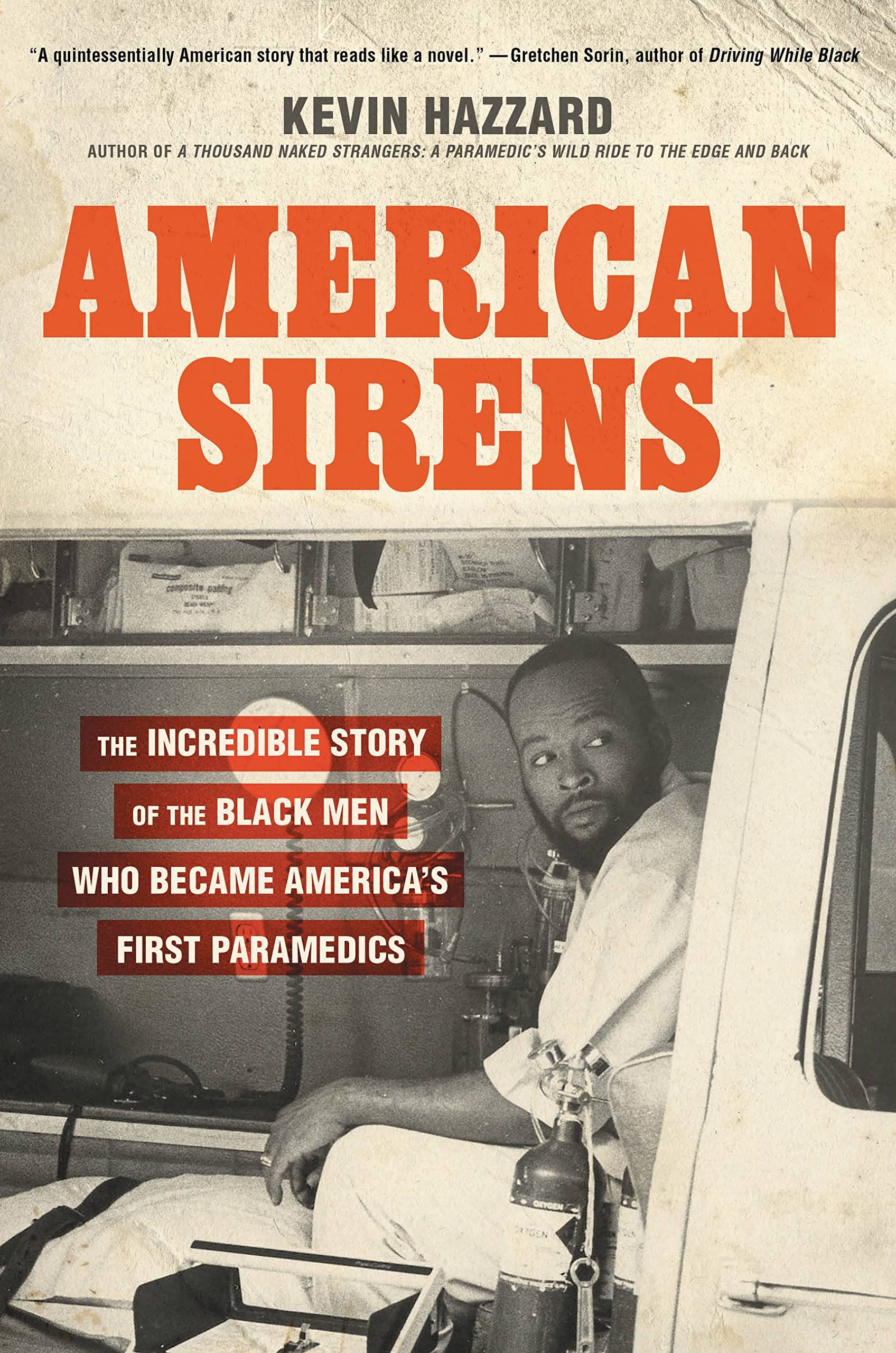
12. A non-fiction book: American Sirens: The Incredible Story of the Black Men Who Became America’s First Paramedics by Kevin Hazzard
List Progress: 14/30
Emergency medicine seems so intuitive that it is easy to think that it has always been around; if someone is hurt or becomes ill somewhere other than a healthcare facility, it just seems natural that they should be given medical attention as soon as possible, as well as in transit. So the first revelation of Kevin Hazzard’s book American Sirens is that paramedics have only existed since 1968. While ambulances have been around in some form or another since the 1700s, they existed purely on a “swoop and scoop” system, bringing people to hospitals as quickly as possible and handing them over to the doctors. It took a trailblazing organization called Freedom House in Pittsburgh to change the face of modern medicine so greatly that most people assume it has been this way forever. Hazzard’s book traces the rise, victory, fall and forgetting of Freedom House in rich detail, a period of less than ten years that changed the course of human history forever.
The prologue of American Sirens sets up the core tenets of the story very deftly: a homeless Black man in 1980s Pittsburgh becomes agitated and disruptive and has white police officers called on him. A Black paramedic by the name of John Moon also hears the call and decides to intercede, deescalating the situation and making it clear that what the man needs is someone to talk to and medical attention, not law enforcement. And in fact Moon knows this man, as they worked side-by-side in Freedom House fifteen years prior. Moon managed to stay a paramedic when the system was absorbed by the city government, clinging by his fingernails, while many of the other competent, highly-trained paramedics were drummed out of the system to be replaced by newer, less-experienced, less-trained white men. But they were both there at Freedom House and what they did mattered. The book then steps back in time to trace how emergency medicine has always been inextricably linked with racism and how from its inception, paramedics were in a tug of war with police departments. John Moon is one of the main characters the book follows throughout, his life and career becoming a microcosm for Freedom House as a whole.
Hazzard follows a few different main characters in addition to Moon, and this does occasionally mean that American Sirens has to jump around in time; the reader spends a great deal of time with Moon in 1960s Pittsburgh before jumping back to the 40s to meet Dr. Peter Safar at the beginning of his career in Vienna. But once the main players have all been introduced, the book keeps a tight focus on Freedom House, which only lasted for eight years and yet shaped the course of medicine across the world. Following individual people helps keep the book human and personal, but there are moments where it would have been nice to meet more people involved with or impacted by the paramedics.
Freedom House has largely been erased from public memory, but American Sirens does a great job showing who they were, why they mattered, and how emergency medicine was different before and after them. A little attention and recognition is the very least these people deserve.
Would I Recommend It: Yes. And shout-out to the medical drama tv show The Pitt, which contained a brief subplot about Freedom House and brought their story to my and many people’s attention.
 Alanna McFall