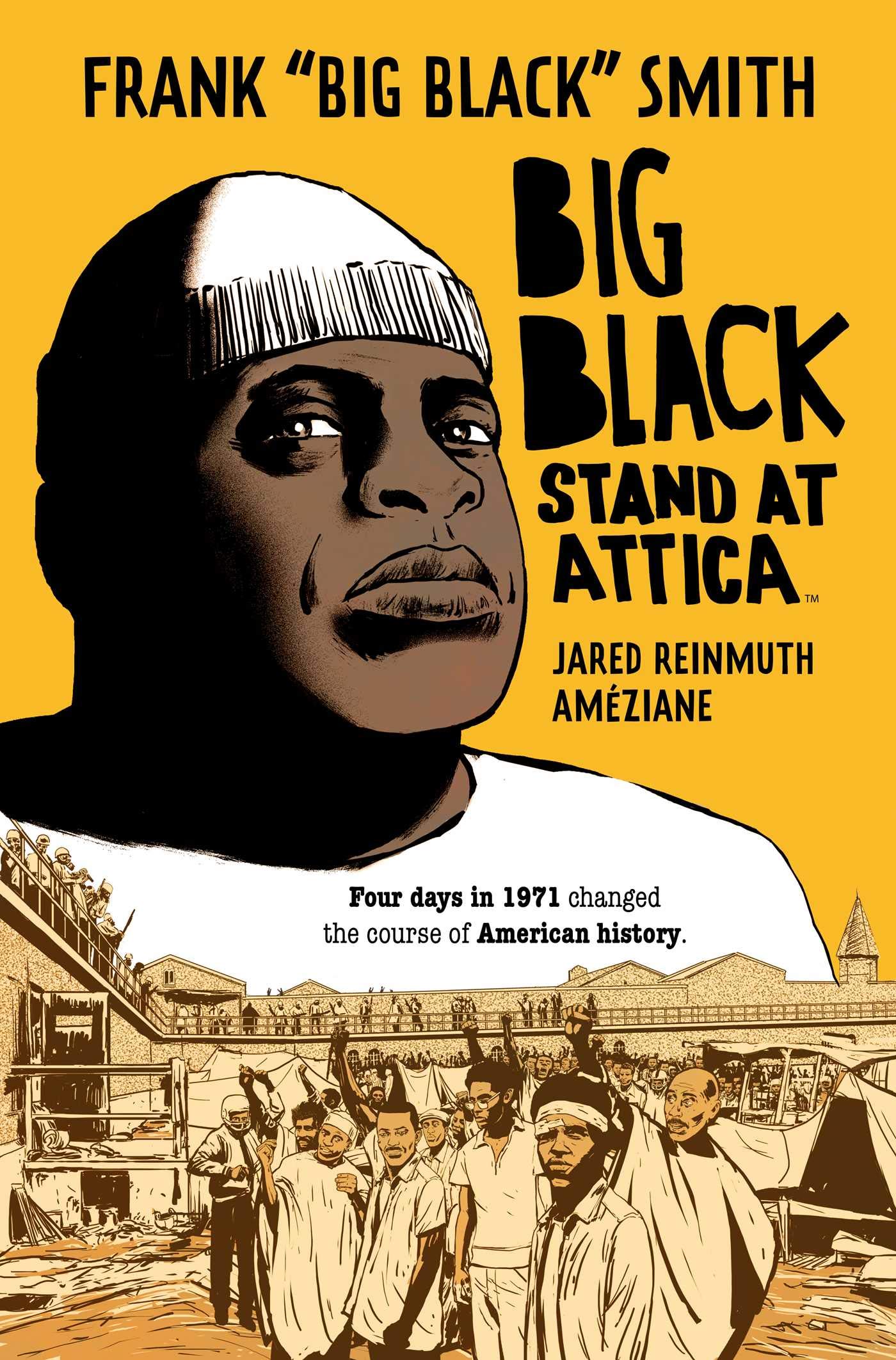
11. A biography or memoir: Big Black: Stand at Attica by Frank “Big Black” Smith and Jared Reinmuth, illustrated by Ameziane
List Progress: 7/30
With biographies and memoirs, there are two different things contributing to how enjoyable it is to read. Firstly, is the story itself interesting; secondly, is it told in an interesting way. Big Black: Stand at Attica certainly ticks the box on the first question: the Attica Prison riot in 1971, and the brutal and bloody response that followed, shook the country and impacted the paths that prison reform, prison abolition, and the carceral system have taken in the intervening decades. It is the second question where this graphic novel stumbles. While real life is messy and does not always have clear beats and “main characters”, narratives require some structure to convey the most impact. A finer degree of crafting could have made this extreme story really shine.
Between September 9th and 13th, prisoners at the state prison in upstate Attica, New York, rioted against a system rife with racism, abuse, and degradation of basic human dignity. After four days Governor Nelson Rockefeller commanded the prison to be taken back by force. By the time the smoke cleared, 33 inmates and 10 hostages were dead, with only 3 inmates and 1 hostage having been killed by the rioting prisoners. This telling focuses on Frank “Big Black” Smith, a well-liked inmate who served as a security officer for the prisoners, keeping peace in the yard and keeping the hostages safe while the prison population organized and formalized their demands. In the aftermath, he was singled out for an especially-extreme level of abuse and torture from police, based on the lie that prisoners had murdered and mutilated a hostage guard (who had in fact died from gunfire by the invading police; this lie about a castrated guard was brazenly spread to and by the media). The comic concentrates largely on the days of the riot, but also follows Big Black through some of the legal proceedings that he and other surviving “Attica Brothers” undertook, until his passing in 2004 at age 71.
Big Black is nuanced and portrayed well in the comic that bears his name, as much of it is based on his own words and writings. But outside of him as a central character, the story struggles to define the key players. There are different factions in the inmate population of Attica, many of whom were politically active long before the riot, but the novel struggles to make them distinct and differentiate their viewpoints, even in debates taking place between them. The art style, while impactful with its heavy lines and limited color palette, can also make it difficult to tell people apart. And in an odd choice, the layout of the pages often shifts from one- to two-page spreads seemingly at random, which effectively places panels out of order on the first pass through. Two-page spreads are usually reserved for splash pages in comics, so it’s an odd choice that breaks up the visual flow for the reader.
It is difficult not to recommend Big Black: Stand at Attica. It is an impactful story; it is as relevant and impactful now as when it took place, if not moreso. And as a graphic novel, it’s a quick read. But a higher level of nuance from both author Jared Reinmuth and illustrator Ameziane could have made the work shine. And this story deserves to shine.
Would I Recommend It: Soft yes.
 Alanna McFall